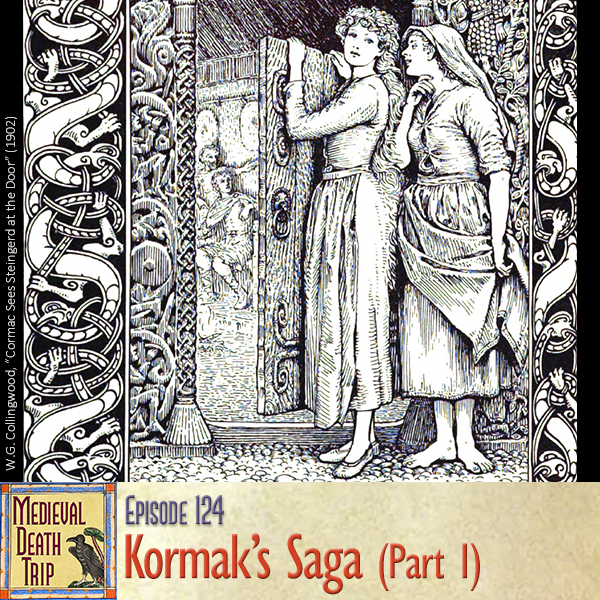
In this episode, we bring Kormak’s Saga to its conclusion and find out if one man’s unrelenting infatuation can triumph over a curse. We also talk about recognizing witches’ eyes and read between the lines on our protagonists’ relationship.
Today’s Text:
The Life and Death of Cormac the Skald. Translated by W.G. Collingwood and J. Stefansson. Viking Club Translation Series, no. 1., Wm Holmes, Ltd., 1902. Google Books.
Ármann Jakobsson. “The Trollish Acts of Þorgrímr the Witch: The Meanings of Troll and Ergi in Medieval Iceland.” Saga-Book, vol. 32, 2008, pp. 39-68. JSTOR.
Byock, Jesse. Viking Age Iceland. Penguin, 2001.
Finlay, Alison. “Níð, Adultery, and Feud in Bjarnar saga Hítdœlakappa.” Saga-Book, vol. 23, 1990-1993, pp. 158-178. JSTOR.
—. “Skalds, Troubadours and Sagas.” Saga-Book, vol. 24, 1994-1997, pp. 105-154. JSTOR.
Hollander, Lee. “The Case of the Skald Kormak.” Monatshefte für Deutschen Unterricht, vol. 35, no. 3/4, Mar.-Apr. 1943, pp. 107-115. JSTOR.
Jochens, Jenny. “The Illicit Love Visit: An Archaeology of Old Norse Sexuality.” Journal of the History of Sexuality, vol. 1, no. 3, Jan. 1991, pp. 357-392. JSTOR.
McDaniel, Walton Brooks. “The Pupula Duplex and Other Tokens of an ‘Evil Eye’ in the Light of Ophthalmology.” Classical Philology, vol. 13, no. 4, Oct. 1918, pp. 335-346. JSTOR.
Meylan, Nicholas. “The Magical Power of Poetry.” Saga-Book, vol. 37, 2013, pp. 43-60. JSTOR.
Raffield, Ben, Neil Price, and Mark Collard. “Polygyny, Concubinage, and the Social Lives of Women in Viking-Age Scandinavia.” Viking and Medieval Scandinavia, vol. 13, 2017, pp. 165-210. JSTOR.
Roesdahl, Else. The Vikings. Revised ed., translated by Susan M. Margeson and Kirsten Williams, Penguin, 1998.
Audio Credits:
Return of the Jedi. Directed by Richard Marquand. 20th Century-Fox, 1983.
Dylan, Bob. “I Shall Be Free No. 10.” Another Side of Bob Dylan, Columbia Records, 1964. YouTube.
The Princess Bride. Directed by Rob Reiner. 20th Century-Fox, 1987.
“Kormak’s Theme” and “Harpish Improvisations” composed and performed by Patrick Lane.
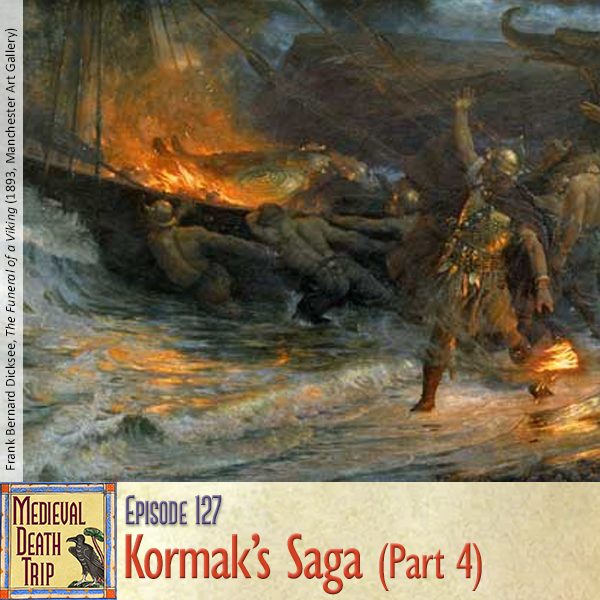
Image Credit: Detail from the painting The Funeral of a Viking by Frank Bernard Dicksee, 1893 (Manchester Art Gallery).
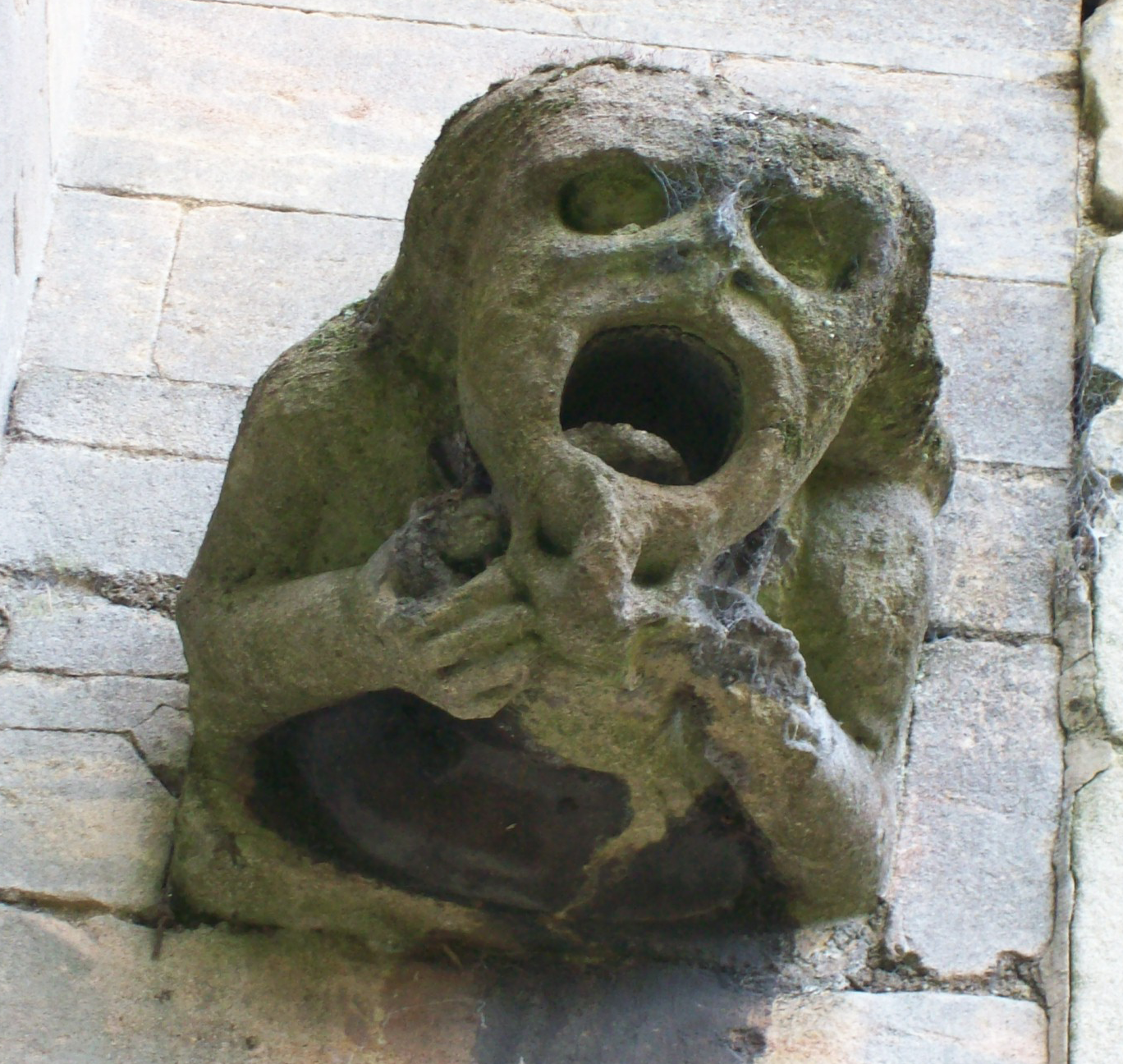
Gargoyle, St. Wulfram’s Church, Grantham, UK (via Wikimedia Commons)
Looking for some spooky season listening? While most Medieval Death Trip episodes are at least a touch macabre, here is a list of some of the most directly eerie, spooky, and horror-tinged ones!
Ep. 97: “Concerning Three Witches”: A survey of three quite different examples of witch tales, including William of Malmesbury’s account of the “Witch of Berkeley.”
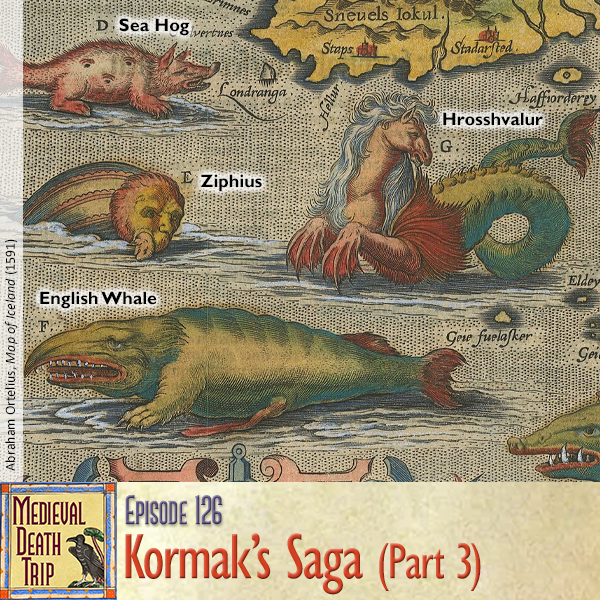
In Part 3 of Kormak’s Saga, we complete the story of Holmgang Bersi and introduce a new rival for Steingerd’s affections. There’s also a magical sea beast, more slanderous poetry, and we discuss Norse names.
Today’s Text:
The Life and Death of Cormac the Skald. Translated by W.G. Collingwood and J. Stefansson. Viking Club Translation Series, no. 1., Wm Holmes, Ltd., 1902. Google Books.
Finlay, Alison. “Níð, Adultery, and Feud in Bjarnar saga Hítdœlakappa.” Saga-Book, vol. 23, 1990-1993, pp. 158-178. JSTOR.
Jochens, Jenny. “The Illicit Love Visit: An Archaeology of Old Norse Sexuality.” Journal of the History of Sexuality, vol. 1, no. 3, Jan. 1991, pp. 357-392. JSTOR.
The Laxdale Saga. Translated by Muriel A. C. Press, 1880. The Icelandic Saga Database, edited by Sveinbjörn Þórðarson, https://sagadb.org/laxdaela_saga.en.
Meylan, Nicholas. “The Magical Power of Poetry.” Saga-Book, vol. 37, 2013, pp. 43-60. JSTOR.
Raffield, Ben, Neil Price, and Mark Collard. “Polygyny, Concubinage, and the Social Lives of Women in Viking-Age Scandinavia.” Viking and Medieval Scandinavia, vol. 13, 2017, pp. 165-210. JSTOR.
Roesdahl, Else. The Vikings. Revised ed., translated by Susan M. Margeson and Kirsten Williams, Penguin, 1998.
Audio Credits:
“Cincinnati Kid.” The Kids in the Hall, Season 2, Ep. 16, 2 April 1991. YouTube.
The Lord of the Rings: The Two Towers. Directed by Peter Jackson, New Line Cinema, 2002.
The Big Lebowski. Written by Joel Coen and Ethan Coen, Gramercy Pictures, 1998.
“Kormak’s Theme” and “Harpish Improvisations” composed and performed by Patrick Lane.
Image Credits: Detail from Abraham Ortelius, Map of Iceland (1591). Via Wikimedia Commons.
We continue with Kormak’s Saga as a new lead character is introduced, Holmgang Bersi, who soon becomes ensnared in the drama of the cursed romance of Kormak and Steingerd. We also learn the basic of Viking duelling and its weapons, and also try to get a grip on the slippery terminology of Norse magic.
Today’s Text:
The Life and Death of Cormac the Skald. Translated by W.G. Collingwood and J. Stefansson. Viking Club Translation Series, no. 1., Wm Holmes, Ltd., 1902. Google Books.
Biel, William. “Memory of Iron: Object Rhetoric and Collective Memory in Laxdæla saga.” Scandinavian-Canadian Studies / Études Scandinaves au Canada, vol. 28, 2021, pp. 178-203, https://scancan.net/index.php/scancan/article/view/206/411.
The Saga of King Hrolf Kraki. Translated by Jesse Byock, Penguin, 1998.
Jones, Gwyn. “Some Characteristics of the Icelandic ‘Hólmganga.'” Journal of English and Germanic Philology, vol. 32, no. 2, Apr. 1933, pp. 203-224. JSTOR.
We inaugurate our first “Saga Summer” a bit late this year, but starting with an early poet’s saga, a tale of love and betrayal, duels and magic. This is Part 1 (of 4) of Kormak’s Saga.
Today’s Texts:
The Life and Death of Cormac the Skald. Translated by W.G. Collingwood and J. Stefansson. Viking Club Translation Series, no. 1., Wm Holmes, Ltd., 1902. Google Books.
Egil’s Saga. Translated by Hermann Pálsson and Paul Edwards, Penguin, 1976.
Egil’s Saga. Translated by Bernard Skudder, The Sagas of Icelanders: A Selection, Penguin, 2001, pp. 3-184.
References:
Andersson, T.M. “The Emergence of Vernacular Literature in Iceland.” Mosaic: An Interdisciplinary Critical Journal, vol. 8, no. 4, Summer 1975, pp. 161-169. JSTOR.
Finlay, Alison. “Skalds, Troubadours and Sagas.” Saga-Book, vol. 24, 1994-1997, pp. 105-154. JSTOR.
Hollander, Lee. “The Case of the Skald Kormak.” Monatshefte für Deutschen Unterricht, vol. 35, no. 3/4, Mar.-Apr. 1943, pp. 107-115. JSTOR.
Jónas Kristjánsson. Eddas and Sagas. Translated by Peter Foote, Hið íslenska bókmenntafélag, 1997.
Malm, Mats. “Skalds, Runes, and Voice.” Viking and Medieval Scandinavia, vol. 6, 2010, pp. 135-46. JSTOR.
O’Donoghue, Heather. Old Norse-Icelandic Literature: A Short Introduction. Blackwell, 2005.
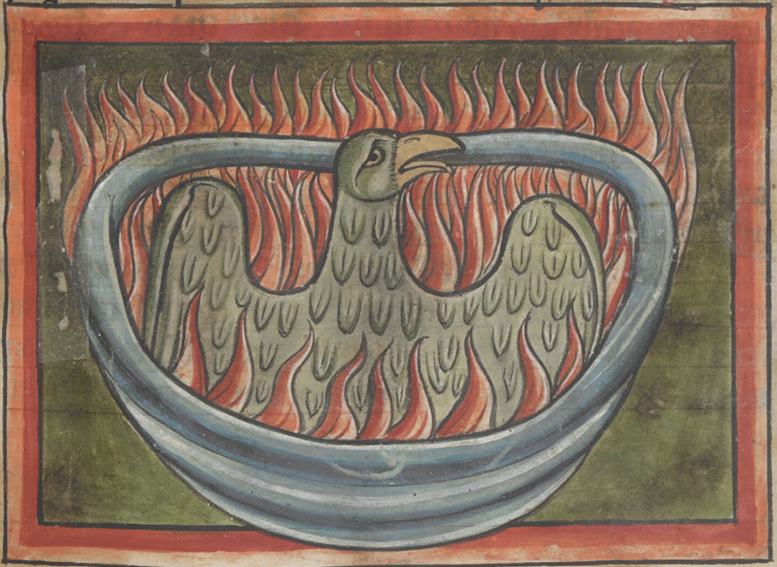
Illustration of a Phoenix from British Library, MS Harley 4751, fol. 45r.
“Survivors at the End of Their Worlds: Voices from the Exeter Book and Other Apocalypses”
Online class, Tuesdays, 7-9pm Central Daylight Time (UTC-5) [Updated Schedule:] Oct. 20 – Nov. 10, 2026
This course will explore the remarkable medieval survivor that is the Exeter Book, a thousand-year-old, scarred manuscript that contains the only known copies of the so-called Old English Elegies. The speakers in these poems express each in their own way feelings of being alone in a world breaking apart. Through these poems, we will introduce the formal features and cultural context of Old English poetry (in translation, but with reference to the original language). We will consider their apocalyptic anxieties alongside those of later medieval mystics, modern poets, a third-generation clone from 200 years in the future, and, of course, ourselves.
The course fee is $395 (fee reductions are negotiable with Enclosure Academy for students or others with financial need, and discounts are available for early registration).
Prospective Syllabus for the course (subject to change):
Survivors at the End of Their Worlds: Voices from the Exeter Book and Other Apocalypses
“Þæs oferēode, þisses swā mæg.” [That passed away, and so may this.] —from the Exter Book, Deor
“It’s the end of the world as we know it, and I feel fine.” —R.E.M.
This course will explore the remarkable medieval survivor that is the Exeter Book, a thousand-year-old, scarred manuscript that contains the only known copies of the so-called Old English Elegies. The speakers in these poems express each in their own way feelings of being alone in a world breaking apart. Through these poems, we will introduce the formal features and cultural context of Old English poetry (in translation, but with reference to the original language). We will consider their apocalyptic anxieties alongside those of later medieval mystics, modern poets, a third-generation clone from 200 years in the future, and, of course, ourselves.
The class will meet during the scheduled times using Zoom (https://www.zoom.com/). Please have the Zoom Meeting application installed and updated before the class start time. Links for joining the class meetings will be sent out ahead of time. Class sessions will discuss the readings listed for that day, so please read the scheduled texts before the start of class so that you can get the most out of the discussion.
Collection Commonplaces:
Starting with the readings for Week 2, you should begin building a collection of items that strike you as you read through the selections. These could be specific words that seem significant or strange, individual lines or sentences that linger or puzzle, and/or concepts and themes that you notice emerging as you read. Copy each item down into your preferred note-taking system (notepad, notebook, cards, app); collect at least three items (preferably several more than that). Then of all the items you’ve added to your collection for that session, pick three and for each one, write out a brief observation about why you collected that item. Then jot down a connection you can make between that item and one of the other readings — or any other media or culture that it resonates with for you. I’ll be looking for people to share some of the items in the collections during our discussions.
Required Text:
Hamer, Richard, editor. A Choice of Anglo-Saxon Verse. Faber & Faber, 2016. ISBN-10: 0571325394 (paperback), 0571087646 (hardcover) (A Kindle edition also available and usable, though it may make comparisons with the original Old English lines less convenient.)
Additional readings will be made available through links to versions posted online or by PDFs provided by email and in our class Google Drive resources.
Schedule
(ASV refers to the required text, A Choice of Anglo-Saxon Verse; other readings will be provided.)
Week 1 (10/20): Introduction to the Exeter Book Readings: Wulfstan, Sermo Lupi ad Anglos; “Fortunes of Men”; “The Ruin” (ASV); Özge Lena, “Writing Poems in the Middle of a Catastrophe”
Week 2 (10/27): The Lonely Road Readings: “The Wanderer” (ASV); “The Seafarer” (ASV); “Deor” (ASV); Claire Colebrook, “End Times for Humanity”; C. K. Williams, “Tar”
Week 3 (11/3 — adjust to 7pm CST): Love’s Exiles Readings: “The Wife’s Lament” (ASV); “The Husband’s Message” (ASV); “Wulf and Eadwacer” (ASV); Hadewijch of Brabant, “The omens make very clear to us”; Kyla Guimaraes, “The Apocalypse Is Almost Here, So We Do the Dishes”
Week 4 (11/10): Fearsome Futures Readings: “The Whale” (ASV); “Fates of the Apostles” (ASV); Jane Hirshfield, “Let Them Not Say”; Rachael Lin Wheeler, “Field Notes on Living, Perpetually, on the Brink of Tragedy”; Douglas Adams, “Sifting Through the Embers”; Don Hertzfeldt, World of Tomorrow





Recent Comments